

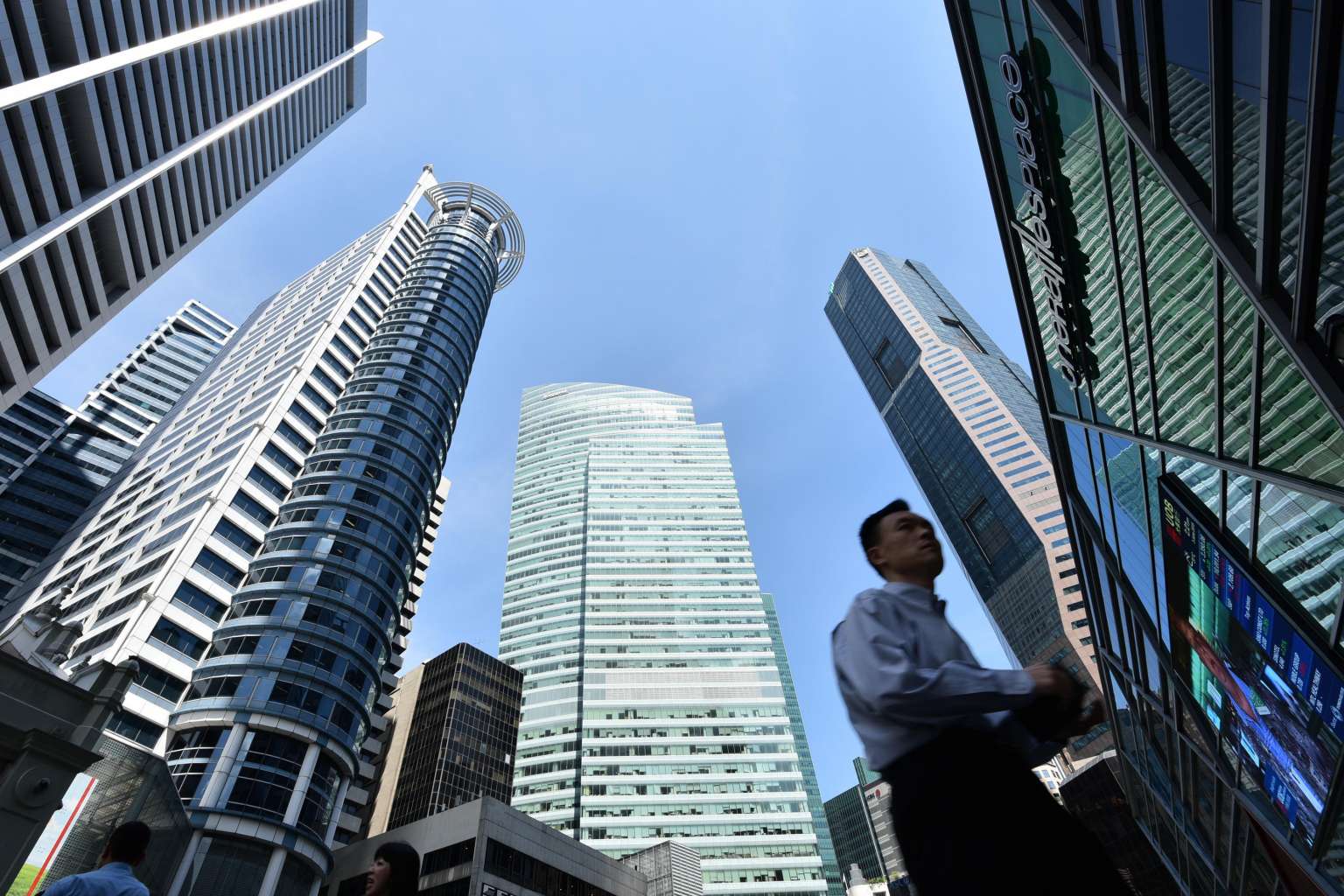
Singapore’s reputation as a global business hub is well-established, but beneath its gleaming skyscrapers and bustling financial district lies an often-overlooked ecosystem: the thriving underground of tech startups operating in unconventional spaces. These enterprises, which include everything from AI-powered ghost kitchens to blockchain-based underground markets, represent a radical departure from traditional corporate structures. According to recent data from the Infocomm Media Development Authority (IMDA), Singapore’s tech startup scene has grown by 42% year-over-year, with 67% of these ventures operating outside conventional office spaces. This article explores the motivations, challenges, and innovations driving this hidden sector, offering a contrarian perspective on how business work ‘s startup culture is evolving beyond the mainstream.
The Rise of the Ghost Workforce
One of the most striking examples of Singapore’s unconventional startup ecosystem is the rise of ghost kitchens—commercial kitchens that operate without a physical dining space. These facilities, which account for 23% of Singapore’s food delivery market, are a prime example of how startups are leveraging technology to bypass traditional retail constraints. Unlike traditional restaurants, ghost kitchens rely on third-party delivery platforms like GrabFood and Foodpanda, allowing them to operate with minimal overhead. However, this model is not without controversy. A 2023 study by the National Environment Agency revealed that ghost kitchens contribute to a 15% increase in food waste due to overproduction and inefficient delivery logistics.
The ghost kitchen phenomenon highlights a broader trend: startups in Singapore are increasingly using technology to create scalable, low-cost business models. These enterprises often operate in “dark spaces”—shared offices, converted warehouses, or even repurposed shipping containers—rather than traditional retail locations. This shift is driven by a combination of factors, including rising rental costs, regulatory flexibility, and the need for agile, adaptable business structures.
Key Characteristics of Ghost Kitchens
- No physical dining space: Operates solely through delivery platforms.
- Minimal overhead: Lower operational costs compared to traditional restaurants.
- Scalability: Easily replicates across multiple locations.
- Tech dependency: Relies heavily on digital ordering and logistics systems.
Blockchain and the Underground Economy
Another emerging trend in Singapore’s hidden startup sector is the use of blockchain technology to facilitate underground economic activities. Unlike traditional financial systems, blockchain-based platforms allow for peer-to-peer transactions without intermediaries, making them ideal for illegal or semi-legal markets. A 2023 report by the Monetary Authority of Singapore (MAS) found that 18% of Singapore’s darknet market transactions involve cryptocurrencies, with Bitcoin accounting for 72% of these transactions. This highlights a paradox: while blockchain is often associated with transparency and security, it is also being weaponized by underground economies.
The rise of blockchain in Singapore’s underground economy is part of a broader global trend. Unlike traditional startups, which often focus on legal, regulated industries, these enterprises operate in the “gray zone”—spaces where traditional business models fail. This requires a different set of skills, including cybersecurity expertise, legal knowledge, and a deep understanding of regulatory loopholes. As the MAS continues to tighten regulations on cryptocurrencies, these startups must adapt quickly, further fueling the rapid innovation within this niche sector.
Blockchain Startups in Singapore
- Decentralized marketplaces: Platforms for illegal goods without intermediaries.
- Private cryptocurrencies: Digital assets used for underground transactions.
- Smart contract enforcement: Automated agreements for illicit services.
- Regulatory arbitrage: Exploiting legal ambiguities in financial systems.
The Role of Shared Workspaces
Shared workspaces, such as WeWork and The Incubator, have become a staple of Singapore’s startup culture. However, these spaces are not just about cost savings—they also foster a sense of community and collaboration. A 2023 survey by the Singapore Workspace Federation found that 58% of startups in shared workspaces reported higher productivity due to the networking opportunities and flexible environments. This is particularly relevant for startups operating in the hidden sector, where traditional office spaces may raise suspicion.
Unlike traditional startups, which often operate in isolation, these enterprises benefit from the shared workspace model by gaining access to a broader network of like-minded individuals. This is especially important for startups in the underground economy, where reputation and trust are critical. Shared workspaces also provide a level of anonymity, allowing startups to operate without drawing unwanted attention from regulators or competitors.
Benefits of Shared Workspaces
- Cost efficiency: Lower rental costs compared to traditional offices.
- Networking opportunities: Access to a broader community of entrepreneurs.
- Flexibility: Adaptable environments for different business models.
- Anonymity: Reduced risk of regulatory scrutiny.
Challenges and Future Outlook
The hidden startup sector in Singapore faces significant challenges, including regulatory uncertainty, cybersecurity risks, and public perception. However, these challenges also present opportunities for innovation. As the government continues to crack down on illegal activities, startups in this sector must adapt quickly, leveraging technology to stay one step ahead. The future of Singapore’s hidden startup ecosystem will likely involve a combination of legal innovation, regulatory arbitrage, and technological advancement.
Looking ahead, the most successful startups in this sector will be those that can navigate the complex intersection of technology, law, and society. This requires a deep understanding of both the technical and regulatory landscapes, as well as a willingness to operate in the “gray zone.” As Singapore continues to evolve as a global business hub, the hidden startup sector will play an increasingly important role in shaping its future.
Key Challenges for Hidden Startups
- Regulatory uncertainty: Changing laws and enforcement actions.
- Cybersecurity risks: Vulnerabilities in digital transactions.
- Public perception: Stigma associated with illegal activities.
- Scalability issues: Difficulty in expanding operations.
Conclusion
Singapore’s hidden startup sector represents a radical departure from traditional business models, operating in spaces where conventional wisdom would suggest failure. From ghost kitchens to blockchain-based underground markets, these enterprises are pushing the boundaries of what is possible in the modern economy. As the city-state continues to evolve, the hidden startup sector will play an increasingly important role in shaping its future, offering a contrarian perspective on how innovation can thrive in the shadows.